| PROBLEM |
CAUSE |
SOLUTION |
|
Low yield
|
Incomplete elution from your spin column
|
- After adding nuclease-free water to the column matrix in the elution step, incubate 5-10 min at room temperature prior to centrifugation
- For maximum RNA recovery, use the largest volume that gives you the RNA you need-you can always concentrate your RNA using ethanol precipitation.
|
|
Your sample is degraded, potentially due to improper storage or the homogenization was too aggressive causing too much heat or shearing
|
- Store your sample at -80°C prior to use ideally, immediately after collection
- Homogenize your sample in bursts of 30-45 seconds with 30 seconds of rest to avoid overheating
- If using fresh tissue, apply cold guanidine lysis buffer immediately after tissue harvest to prevent RNase activity
|
|
Your sample was insufficiently disrupted or homogenized
|
- Consider a different lysing matrix or use cryo-conditions to effectively homogenize your samples
- Increase time of sample digestion or homogenization
- Centrifuge your sample after Proteinase K digestion or homogenization to pellet the debris and transfer the RNA-containing supernatant to a fresh tube
- Double the amount of Proteinase K (from 5% to 10%) to increase RNA yield
|
|
Too much sample
|
- Reduce amount of starting material to fall within the kit recommendations
- Use a scale to weigh your sample so you know you are using the same amount each time, or can anticipate the yield. If you are extracting RNA from cells, consider counting the cells in your sample prior to RNA extraction
|
|
RNA degradation or RNA bands appear smeared on a gel
|
The starting material was improperly stored
|
- Freeze your samples using liquid nitrogen or -80°C immediately after collection
|
|
The sample is not handled properly during extraction
|
- Add beta-mercaptoethanol (2-ME) to the lysis buffer (10 µl of 14.3M BME per 1 ml of lysis buffer) to inactivate RNases and stabilize the sample during extraction
|
|
Your eluted materials or kit buffers are contaminated with RNase
|
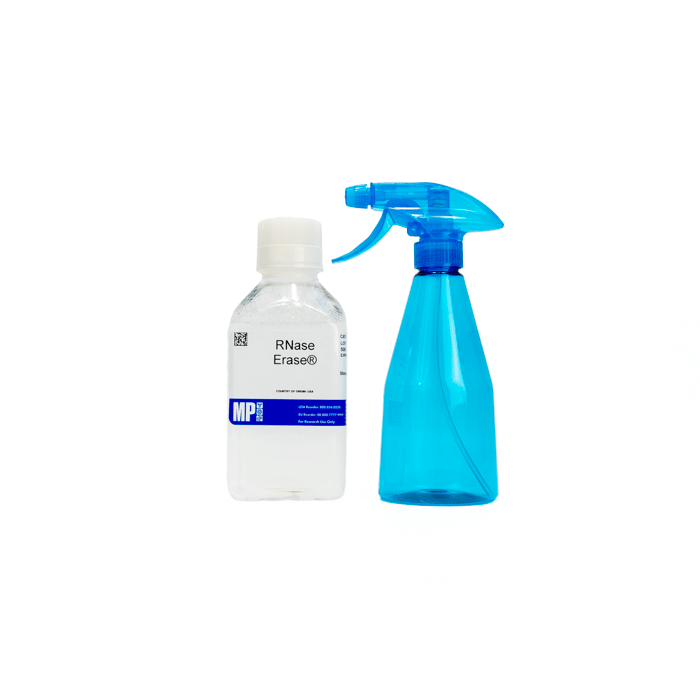
- Thoroughly clean your bench with our decontamination solution, RNase Erase, and consider designating a specific lab area for RNA handling.
- Constantly use gloves while working with RNA-some researchers even change their gloves periodically throughout a single protocol.
- Remember to replace your pipette tip when transitioning between reagents
- Make (or use) fresh buffers
|
|
Electrophoresis equipment and liquid handling equipment are contaminated with RNAses
|
- Immerse your tips, microcentrifuge tubes, and other consumables in 0.1% DEPC and autoclave
- Clean all the surfaces, pipettes, gel electrophoresis casting/running tank and any other reusable tool and equipment you are using for RNA handling with RNase Erase decontamination solution.
- Use commercial 50X TAE (rather than homebrewed buffer), dilute it with DEPC water and run the RNA as soon as possible to avoid in-run RNAses activity
|
|
DNA contamination
|
Genomic DNA was not removed by the column
|
- The best way to remove the gDNA is with a DNase treatment. Consider treating the sample with DNase while on the column or performing an in-tube (off-column) DNase treatment.
|
|
Too much sample was used
|
- Check the kit specifications and reduce the amount of starting material (if needed) to avoid overloading the buffer.
|
|
genomic DNA was insufficiently sheared during homogenization
|
- Try a method that breaks the DNA such as bead beating with the appropriate lysing matrices.
Note that mechanical shearing with bead beating will heat the samples but chilling samples in guanidine can cause salt to precipitate out, so you'll need to find the optimal timeframe for homogenization and cool down.
|
|
For those using the phenol method, the pH is too basic, preventing proper nucleic acid segregation
|
- Remake and test your reagents and buffers to ensure your pH is acidic
|
|
Clogged column
|
Your sample was not fully disrupted or homogenized
|
- Increase the time of sample digestion or homogenization or consider using more aggressive homogenization lysing matrices
- Centrifuge your samples after Proteinase K digestion or homogenization to pellet debris and carefully transfer the supernatant to a new tube to carry out the remaining steps
- Consider using a metal lysing tube or cryogenic conditions for your most difficult samples
|
|
Too much sample was added to the column
|
- Reduce amount of starting material to the recommendations of your protocol or kit
|
|
Unusual Spectrophotometric readings
|
The RNA concentration is too low for spectrophotometric analysis
|
- For a more concentrated RNA, elute with less nuclease-free water
- Increase the amount of starting material (within the kit recommendations)
|
|
Silica particles are in the eluate
|
- Re-spin the eluted samples so the silica particles navigate to the bottom of the tube. Remeasure the A260/230 by pipetting from the top of the liquid to avoid disturbing the silica.
|
|
Low OD ratios
|
Low A260/280 values suggest you have residual protein in the purified sample, which likely occurred due to too much sample
|
- Ensure the Proteinase K step was applied for the recommended time
- Ensure the samples have no debris prior to loading the sample onto the purification column
- Clean up the sample with another round of your method, and consider using less sample next time
|
|
Low A260/230 values suggest residual guanidine salts or organic inhibitors such as humic acids are in the purified sample
|
- Add additional wash steps with 70-80% ethanol to a silica prep protocol, or for precipitation protocols, wash the pellet with ethanol.
- Consider re-purifying the sample on a fresh column and wash it thoroughly before elution
|
|
Low performance of RNA in downstream steps
|
Salt and/or ethanol was carried over during elution
|
- Avoid letting the tip of the spin column contacting the flow-through after the final wash. If this happens, centrifuge again before continuing with your protocol
- If you are reusing collection tubes, blot the rim of the tube on a Kimwipe prior to reattachment to the column to remove residual wash buffer
- Add another wash step prior to elution
|