
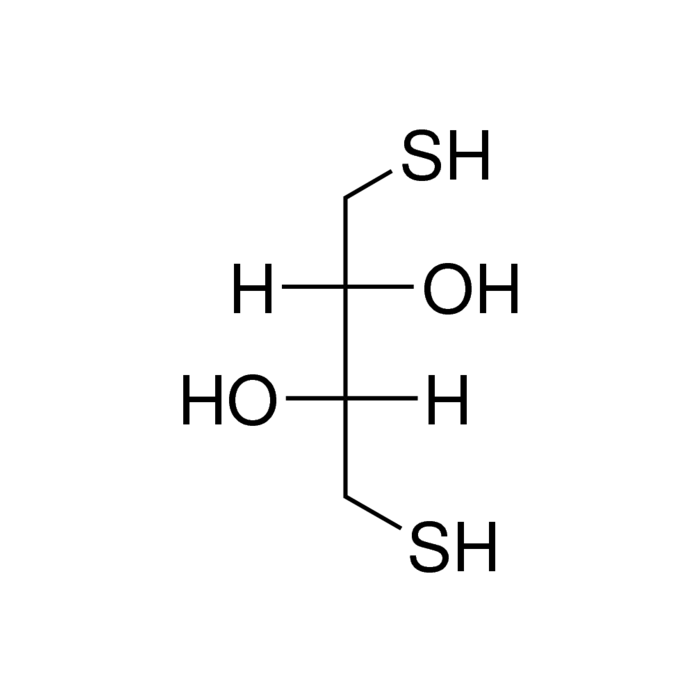
DL-Dithiothreitol, molecular biology reagent
SKU: 02194821-CF
DL-Dithiothreitol (DTT) from MP Biomedicals is a thiol-based reducing reagent used to cleave disulfide bonds under suitable reaction conditions. In protein workflows, reducing conditions can help prepare samples for analytical separation or maintain the reduced state of selected cysteine-containing proteins and enzymes. The compound is also referred to as Cleland’s reagent. The molecular biology grade product (Catalog #194821) is supplied as a powder with a stated purity of ≥99%. Researchers should select DTT concentration, pH, incubation time and downstream cleanup conditions according to their established method; DTT is not a universal additive for every enzyme or assay.
Application Notes
DL-Dithiothreitol is used for stabilizing sulfhydryl containing enzymes. It is effective in sample buffers for reducing protein disulfide bonds prior to SDS-PAGE. DTT can also be used for reducing the disulfide bridge of the cross-linker N,N'-bis(acryloyl)cystamine to break apart the matrix of a polyacrylamide gel.
Usage Statement
Unless specified otherwise, MP Biomedical's products are for research or further manufacturing use only, not for direct human use. For more information, please contact our customer service department.
Key Applications
Reducing Agent
| SKU | 02194821-CF |
| Alternate Names | 1,4-Dithiothreitol; DTT; 1,4-Dithio-DL-threitol; Cleland Reagent racemic; (±)-threo-1,4-Dimercapto-2,3-butanediol; Cleland’s reagent |
| Applications | Reducing Agent |
| Application Notes | DL-Dithiothreitol is used for stabilizing sulfhydryl containing enzymes. It is effective in sample buffers for reducing protein disulfide bonds prior to SDS-PAGE. DTT can also be used for reducing the disulfide bridge of the cross-linker N,N'-bis(acryloyl)cystamine to break apart the matrix of a polyacrylamide gel. |
| Base Catalog Number | 194821 |
| Beilstein Registry Number | 1719757 |
| CAS # | 3483-12-3 |
| EC Number | 248-531-9 |
| Format | Powder |
| Grade | Molecular Biology Grade |
| Half Life | .1 M KPO4 buffer (Half Life in hours):- pH 6.5 at 2 °C: 4, pH 7.5 at 2 °C: 1, pH 8.5 at 2 °C: 1.4, pH 8.5 at °C: 11, pH 8.5 at 4 °C: .2, pH 8.5 at 2 °C with addition of .1 mM Cu2+: .6, pH 8.5 at 2 °C with addition of 1. mM EDTA: 4 |
| Hazard Statements | H302-H315-H319-H335 |
| Melting Point | 40 - 50°C |
| Molecular Formula | C4H10O2S2 |
| Personal Protective Equipment | Dust mask, Eyeshields, Faceshields, Gloves |
| Purity | ≥99% |
| RTECS Number | EK1610000 |
| Safety Symbol | GHS07 |
| Usage Statement | Unless specified otherwise, MP Biomedical's products are for research or further manufacturing use only, not for direct human use. For more information, please contact our customer service department. |
Frequently Asked Questions
Q1. What is DL-Dithiothreitol (DTT) used for?
DL-Dithiothreitol is a reducing agent used in protein and enzyme research to reduce disulfide bonds and maintain suitable sulfhydryl groups. Common applications include reducing SDS-PAGE sample preparation and selected biochemical assays.
Q2. Is DTT the same as Cleland's reagent?
Yes. Dithiothreitol is commonly called DTT or Cleland's reagent. MP Biomedicals also lists 1,4-dithiothreitol and related chemical names among the synonyms for its DL-Dithiothreitol product.
Q3. What is the purity of MP Biomedicals DL-Dithiothreitol, Catalog #194821?
The current MP Biomedicals product page specifies ≥99% purity for its molecular biology grade DL-Dithiothreitol. Confirm acceptance criteria and lot-specific results in the current certificate of analysis.
Q4. Can DTT be used in SDS-PAGE sample buffers?
Yes. DTT can serve as a reducing component in validated SDS-PAGE sample buffers by helping reduce protein disulfide bonds before electrophoresis. Use the concentration and preparation conditions specified by your method.
Q5. How does DTT reduce protein disulfide bonds?
DTT contains thiol groups that participate in reduction of accessible disulfide linkages. During the reaction DTT is oxidized while the target disulfide bond can be converted to reduced thiol groups.
Q6. Can DTT help stabilize enzymes?
For some enzymes containing sensitive sulfhydryl groups, DTT can help maintain a reduced environment. It is not appropriate for every protein or assay; check enzyme-specific requirements and potential reagent interference.
Q7. What is the difference between DTT and 2-mercaptoethanol?
Both are thiol-based reducing agents used in protein workflows, but their handling characteristics and protocol concentrations differ. Select the reagent specified by the method and review each product's SDS; they should not be substituted without validation.
Q8. Is DTT the same as Iodoacetamide?
No. DTT is used to reduce disulfide bonds, whereas iodoacetamide reacts with available thiol groups and is used in selected protein alkylation workflows. They may be used sequentially in validated procedures, but they have different roles.
Q9. How should DTT solutions be prepared and stored?
Follow the validated protocol and current MP Biomedicals label, SDS and technical documentation. DTT solutions can oxidize; preparation, pH, exposure to oxygen, temperature and storage duration may affect reducing activity. Avoid relying on a generic fixed shelf life.
Q10. Is DL-Dithiothreitol a protein extraction kit?
No. DTT is a reducing chemical reagent, not a complete protein extraction or purification kit. It is used as one component within compatible laboratory sample-preparation workflows.
Q11. Can DTT be used for downstream mass spectrometry workflows?
DTT is used in certain proteomics reduction steps before alkylation and digestion, but its compatibility depends on the sample preparation method and downstream instrument requirements. Follow a validated LC-MS/MS or proteomics protocol.
Q12. What packaging sizes are available for Catalog #194821?
The MP Biomedicals page lists 02194821-CF as a product family. Available pack sizes and region-specific purchasing options should be confirmed on the local product variant selector or with customer service.
Q13. Is this DTT product for clinical or human use?
The MP Biomedicals product usage statement describes research or further manufacturing use and not direct human use. Do not infer a diagnostic indication or a universal regional approval from this catalog listing.

 Powered by Bioz