

토양 샘플은 부식산(humic acid), 중금속(heavy metals) 및 기타 방향족 성분(aromatic components) 등과 같은 inhibitory compound가 존재하는 복잡한 환경으로, downstream analysis에 어려움이 있을 수 있습니다. SPINeasy DNA Pro Kit for Soil은 biomass가 낮거나 심하게 오염된 샘플 등 까다로운 토양 샘플 타입에서 순수한 microbiome genomic DNA를 추출할 수 있도록 고안된 제품입니다. SPINeasy DNA Pro Kit for Soil은 세균, 곰팡이, 바이러스, 원생 생물을 포함한 다양한 미생물 군집을 효율적으로 lysis 할 수 있습니다. 이 키트는 다양한 논문에서 인용되고 있는 FastDNA™ SPIN Kit와 수율면에서는 유사하지만, 순도는 훨씬 향상되었으며, 실험 시간도 단축되었습니다. 추출된 DNA는 PCR inhibition이 전혀 관찰되지 않았으며, 추가 inhibitor removal step 없이 long fragment PCR, qPCR, next-generation sequencing (16S 와 whole genome)을 포함한 downstream application에 바로 사용할 수 있습니다.
성능:
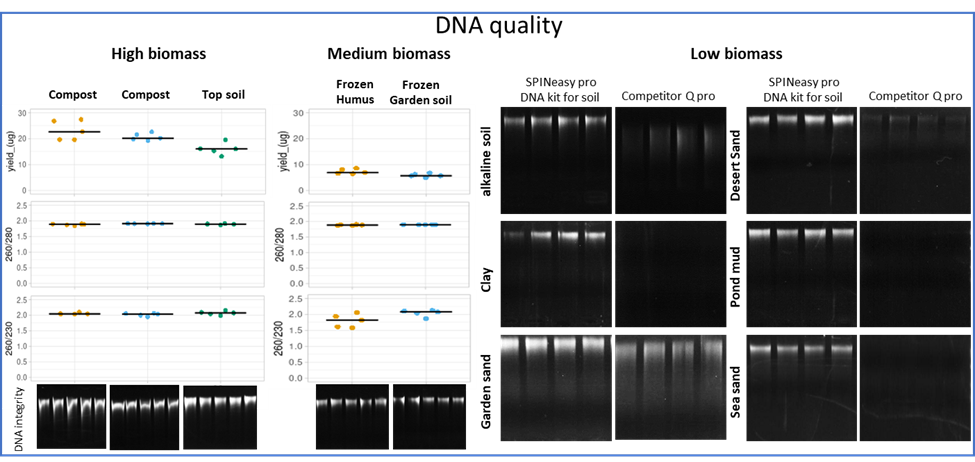
그림1. DNA quality: 다양한 biomass/contaminant content의 토양 샘플 250mg을 SPINeasy DNA Pro Kit for Soil과 타사 키트를 이용하여 DNA를 추출 진행. Medium biomass 그룹은 -20°C에서 12-24개월동안 보관된 샘플로, 이 경우 yield와 추출한 DNA의 integrity에 부정적인 영향을 미칠것으로 예상하고 실험진행하였습니다. DNA 수율과 순도(A260/280, A260/230 비율)는 spectrophotometer를 사용하여 4반복으로 측정되었으며, 위 그래프에서 각 점은 한번의 extraction 을 의미합니다. 가로 막대는 중위값을 나타냅니다. DNA integrity는 DNA gel을 사용하여 평가되었습니다. Low biomass 샘플의 경우, SPINeasy DNA Pro Kit for Soil 과 타사의 키트 (Q pro)를 비교하기 위해 거의 동일한 비율의 DNA elute를 전기영동 하였습니다.
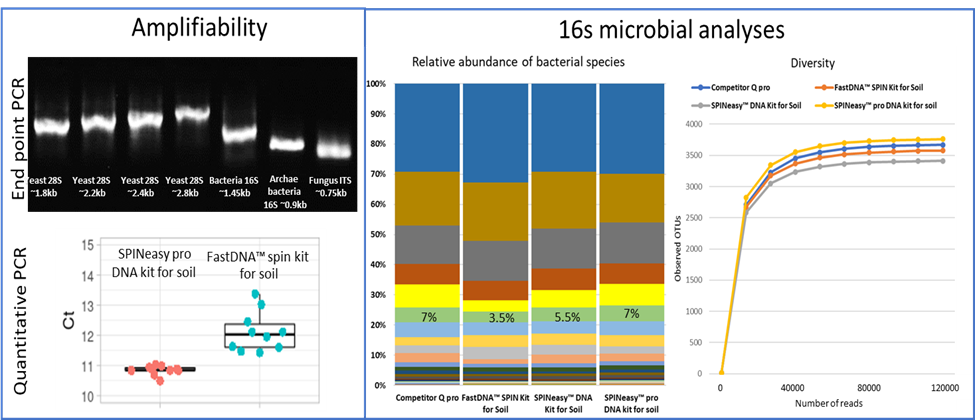
그림2. Amplifiability: Inhibitor의 존재여부를 inhibitor-sensitive PCR과 정량 PCR 을 사용하여 분석 되었습니다 .
16s microbial analyses: 높은biomass 토양에서 범례에 나와있는 4종류의 키트를 사용하여 DNA를 추출한 후 박테리아 16S rRNA유전자의 hypervariable region V4을 증폭하였습니다. NovaSeq PE250 platform을 사용하여 시퀀싱 진행 후, Qiime 2 pipeline을 사용하여 분석하였습니다. 3회 반복 실험을 통해 얻어진 박테리아 종의 상대적 풍부도(relative abundance)는 그래프에서 보실 수 있습니다. 여기에 나와있는 비율(%) 값은 동일한 샘플에서 추출된 DNA 샘플의 그람 양성균 firmicutes (연두색)의 평균 비율을 나타냅니다. 오른쪽에는 각 방법에 해당하는 희박화 곡선(rarefaction curve)을 확인할 수 있습니다. 알파 다양성(alpha diversity)은 sequencing depth (수평축)에 따른 Operational taxonomic units (OTU)의 수 (수직축)로 측정되었습니다.
무료 샘플을 신청하세요!
아래에서 DNA Pro Kit for Soil (SKU: 116546000), 5 preps 샘플을 신청할 수 있습니다.
Application Notes
SPINeasy DNA Pro Kit for Soil은 세균, 곰팡이, 바이러스, 원생생물을 포함한 다양한 미생물 군집을 효과적으로 lysis 합니다. 이 키트는 다양한 논문에서 인용되고 있는 FastDNA™ SPIN Kit와 수율면에서는 유사하지만, 순도는 훨씬 향상되었으며, 실험 시간도 단축되었습니다. 분리된 DNA는 PCR inhibition이 전혀 관찰되지 않았으며, 추가 inhibitor removal step 없이 long fragment PCR, qPCR, next-generation sequencing (16S 와 whole genome)을 포함한 downstream application에 바로 사용할 수 있습니다.
Usage Statement
Research Use Only (RUO).
Key Applications
유전학, 분자생물학, 핵산 추출 및 정제, PCR, qPCR, 시퀀싱(NGS)
| SKU | 116546050 |
| Alternate Names | SPINeasy Pro Soil Kit, DNA Extraction Kit for Soil |
| Applications | 유전학, 분자생물학, 핵산 추출 및 정제, PCR, qPCR, 시퀀싱(NGS) |
| Application Notes | SPINeasy DNA Pro Kit for Soil은 세균, 곰팡이, 바이러스, 원생생물을 포함한 다양한 미생물 군집을 효과적으로 lysis 합니다. 이 키트는 다양한 논문에서 인용되고 있는 FastDNA™ SPIN Kit와 수율면에서는 유사하지만, 순도는 훨씬 향상되었으며, 실험 시간도 단축되었습니다. 분리된 DNA는 PCR inhibition이 전혀 관찰되지 않았으며, 추가 inhibitor removal step 없이 long fragment PCR, qPCR, next-generation sequencing (16S 와 whole genome)을 포함한 downstream application에 바로 사용할 수 있습니다. |
| Base Catalog Number | 65460 |
| Product Line | SPINeasy |
| Components | 50x Lysing Matrix YB, 2 mL RNase A Solution, 55 mL Buffer S1, 22 mL Buffer S2, 50 mL Buffer S3, 28 mL Buffer S4, 40 mL Buffer S5, 6 mL Buffer S6, 50x Column S, 50x 2 mL collection tubes, 50x 1.5 mL collection tubes |
| Format | Kit |
| Hazard Statements | Hazard Class 8 |
| Pack Size | 50 Preps |
| Personal Protective Equipment | Safety Goggles/Faceshield; Gloves |
| Sample Type | Soil, Up to 500 mg of soil samples, including sand, alkaline soil, clay, sediment, and topsoil |
| Sample Volume | Up to 500 mg of soil samples, including sand, alkaline soil, clay, sediment, and topsoil |
| Storage | Store at Room Temperature (15-25℃) in a dry environment |
| Usage Statement | Research Use Only (RUO). |
1. What is the SPINeasy DNA Pro Kit for Soil used for?
The SPINeasy DNA Pro Kit for Soil is designed for the isolation and purification of microbial genomic DNA from soil and sediment samples, including challenging, inhibitor-rich, and low-biomass materials. The purified DNA can be used in downstream molecular biology research applications.
2. How much soil can be processed per preparation?
The kit supports 100–500 mg of soil per preparation. The optimal sample input depends on soil characteristics and should follow the current instruction manual.
3. Can the kit remove humic acid and other PCR inhibitors?
The kit includes an inhibitor-removal step designed to reduce soil-derived contaminants, including humic substances, that may interfere with PCR and other downstream molecular analyses. Removal efficiency may vary depending on the sample characteristics.
4. Is the extracted DNA suitable for 16S sequencing and metagenomics?
Yes. The extracted DNA is intended for downstream applications including 16S rRNA gene sequencing, whole-genome sequencing, PCR, and qPCR. Suitability for metagenomic and other sequencing workflows depends on DNA quality and the requirements of the downstream application.
5. What soil types can be used with the kit?
MP Biomedicals product information lists sand, clay, sediment, alkaline soil, and topsoil among the supported sample types. Extraction performance depends on sample biomass and inhibitor content. Follow the current protocol for recommended processing conditions.
6. Does the kit include bead-beating tubes?
Yes. The 50-preparation kit includes Lysing Matrix YB tubes for mechanical sample disruption, along with extraction reagents and spin-column components required for the DNA purification workflow.
7. Can I use a FastPrep instrument with this kit?
Yes. The protocol describes sample homogenization using a compatible FastPrep instrument and the supplied Lysing Matrix YB tubes. Refer to the current instruction manual for recommended instrument settings and equipment compatibility.
8. How does the SPINeasy DNA Pro Kit for Soil compare with the FastDNA SPIN Kit for Soil?
Both kits are designed to isolate DNA from soil samples using mechanical lysis and silica-based purification. The SPINeasy DNA Pro Kit for Soil uses Lysing Matrix YB tubes and features a workflow designed to improve DNA purity and reduce processing time while providing comparable DNA yields to the FastDNA SPIN Kit for Soil, which uses Lysing Matrix E tubes. The most suitable kit depends on sample characteristics and laboratory requirements.

 Powered by Bioz