Lab Cleaning Solutions & Disinfectants
Maintaining Research Integrity Through Professional Lab Hygiene
Good cleaning practices help prevent data inaccuracies by removing nucleases and residual DNA, protecting sample integrity from RNase/DNase contamination, and eliminating pathogens such as mycoplasma to support both personnel and cell culture safety.
Find Your Ideal Cleaning Solution
What are you fighting today?
Identify your contamination challenge and find the right solution.
| When to Use | Contaminants to inhibit | Recommended Product |
|---|---|---|
| Slow Cell Growth | Mycoplasma | |
| PCR False Positives | DNA | |
| Sample Degradation | DNase/RNase | |
| Routine Cleaning for incubator and waterbath | Microorganisms | |
| Critical Cleaning for labwares and surgical instruments | All types of soils (biomaterials, proteins, enzymes, oils, etc.) |
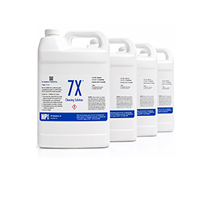
Data-Backed Removal of Microbial Debris with 7X Cleaning Solution

See the Evidence: Effective Removal of Bacterial Debris
In a scanning electron microscopy (SEM) study, 7X Cleaning Solution demonstrated effective removal of Pseudomonas aeruginosa and associated microbial debris from glass surfaces.
Compared with distilled water, treatment with 7X substantially reduced the amount of microbial debris remaining on the surface. After a three-hour treatment, a 1% 7X solution reduced debris coverage to less than 20% of the examined surface, while full-strength 7X reduced coverage to less than 10%.
Explore the microscopy images and experimental results to see how 7X supports effective cleaning of laboratory surfaces.
Comprehensive Mycoplasma Solution
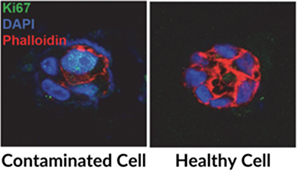
While contamination may be invisible in 2D cultures, it significantly alters gene expression and cellular organization. Using MRA and Myco-Out Mycoplasma Removal Spray ensures that your results reflect your experimental variables rather than an underlying infection. Once mycoplasma is eliminated, cell lines can regain their intended phenotype and proliferation levels in 3D environments.