cfDNA Kits and Workflow Solutions
A typical workflow for cell-free DNA (cfDNA) applications is a multi-step process designed to preserve and isolate highly fragmented, low-abundance genetic material while minimizing contamination from genomic DNA (gDNA).
The process generally follows these four stages :
-
Sample Collection and Preservation: Blood is collected in EDTA or specialized stabilization tubes to prevent leukocyte lysis and gDNA carryover. Similarly, Urine Collection and Preservation Kit (Cat. No. 116594000) is used to maintain analyte stability for up to 30 days at room temperature.
-
cfDNA Extraction: Samples are processed using either silica spin-column kits (e.g., SPINeasy cfDNA Kit for Plasma and Serum (Cat. No. 116596050)) or automated magnetic bead-based systems (e.g., MagBeads Fast Circulating DNA Kit (Cat. No. 117033900)). These methods are optimized to capture short DNA fragments (often <160–200 bp) that traditional kits might miss.
-
Quantification and Contamination Check: Isolated cfDNA undergoes quality control to determine concentration and fragment size profiling. This step is critical to ensure there is no significant gDNA contamination, which can dilute the rare signals needed for sensitive assays.
-
Downstream Applications: The purified, high-quality cfDNA is then used for advanced molecular diagnostics, including Non-Invasive Prenatal Testing (NIPT), Minimal Residual Disease (MRD) monitoring, and comprehensive tumor profiling via PCR or Next-Generation Sequencing (NGS).
A Typical cfDNA Workflow
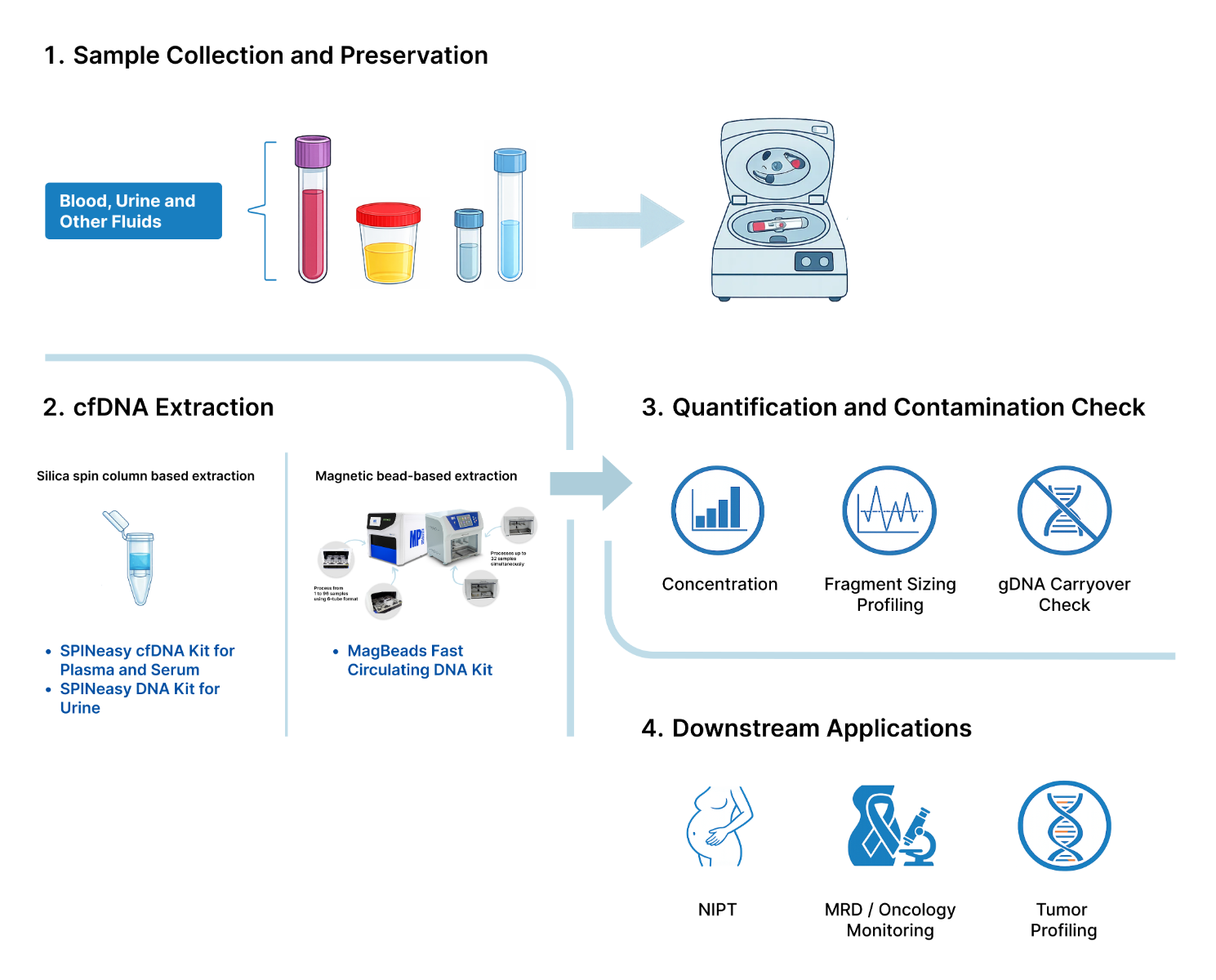
From sample collection and preservation to cfDNA extraction, quality control, and downstream applications.
cfDNA Kits Featured in This Workflow
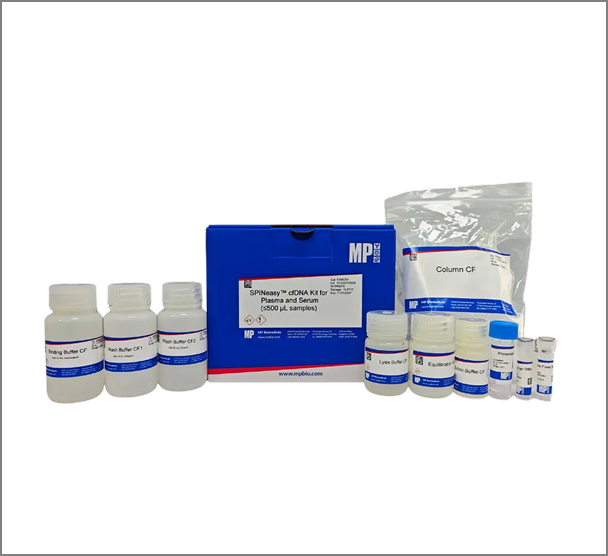 | 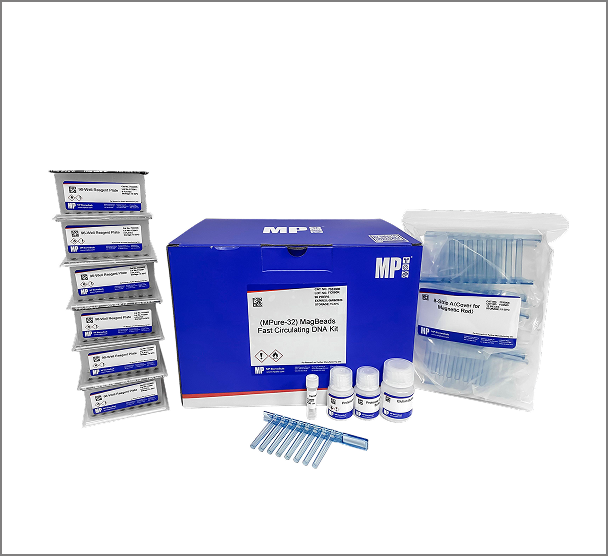 | 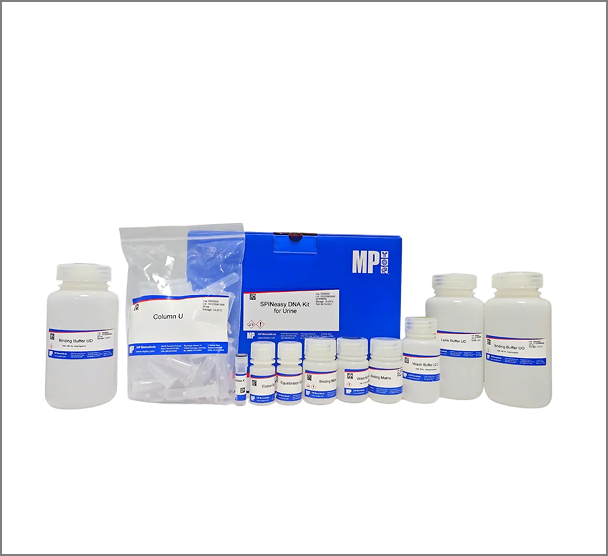 | 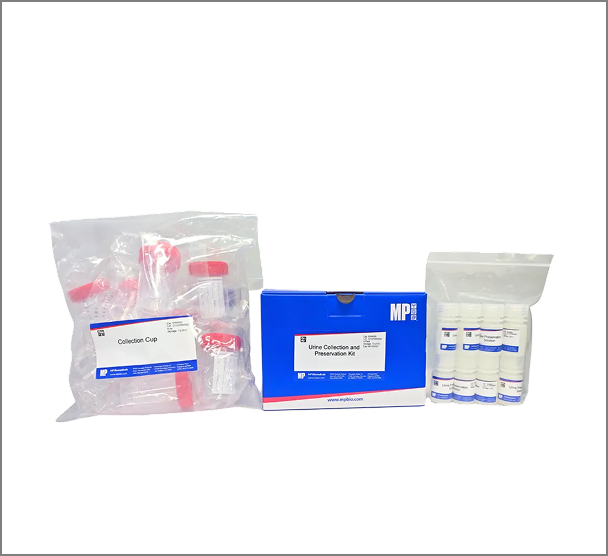 |
SPINeasy cfDNA Kit for Plasma and Serum | MagBeads Fast Circulating DNA Kit | SPINeasy DNA Kit for Urine | Urine Collection and Preservation Kit |
| Learn more | Learn more | Learn more | Learn more |
Learn more about cfDNA extraction from blood and urine—from sample collection to clean results.
Frequently Asked Questions
-
The kits are optimized for a variety of liquid biopsy samples, including plasma, serum, urine, and saliva. They are specifically designed to isolate high-quality cfDNA from these bodily fluids for downstream applications like NGS or qPCR.
-
Processing requirements vary by stabilization tube brand; however, a double-centrifugation protocol is generally required. Please follow manufacturer’s instruction.
-
Clotting process in serum preparation causes leukocytes to lyse, releasing excessive genomic DNA. This masks the target cfDNA fragments, reducing downstream application sensitivity.
-
While yields are highly dependent on the donor's health status and sample handling, a typical range for healthy individuals is 1–15 ng per mL of plasma.
-
Use automated electrophoresis to assess fragment size. High-quality cfDNA shows a 160–170 bp mononucleosomal peak, while gDNA contamination appears as a high–molecular-weight smear/peak. A high %cfDNA score indicates minimal gDNA carryover.
-
Short amplicons (usually <200 bp) reflect the true size of cfDNA fragments which are generally what you want for liquid biopsy workflows. Long amplicons contain intact stretches of DNA that point to gDNA carryover and are commonly used as contamination readout.
-
Yes, the kit is designed to isolate both genomic DNA and cfDNA from either urine pellet or urine supernatant.
-
The Urine Preservation Solution can be added directly to urine samples after collection. To isolate gDNA and cfDNA, centrifuge 10–50 mL of urine at 1,800 × g for 10 minutes. Carefully decant the supernatant into a new tube for cfDNA extraction. Retain the cell pellet at the bottom of the tube for gDNA extraction.