
Why Bead Beating?
Stool samples are complex, loaded with a diversity of microorganisms, macromolecules, metabolites, and particulate non-digested matter. Fecal composition is influenced by a variety of factors, such as the host’s diet and health status, making stool samples interesting specimens to study.
When working with complex samples, it is important that the homogenization protocol effectively lyses all microorganisms so that you get an accurate representation of the microbial community in downstream analyses.
Bead beating is necessary to sufficiently lyse Gram-positive bacteria, and compared to methods without bead beating, it can increase the total yield and quality of extracted genomic DNA.
With the right lysing matrix and protocol, you can accomplish accurate microbial representation, boost the accuracy of your results, and accelerate sample processing.
Choosing the Appropriate Lysing Matrix
Lysing matrices differ in material, shape, and size, dictating the level of aggressiveness. Fecal samples are soft, and largely composed of microorganisms and water, so a less aggressive lysing matrix is sufficient. The least aggressive beads are low density, “soft” materials, spherical, and small.
Common bead materials for stool sample processing:
- Ceramic
- Silica
- Glass
- Combination of the above (often ideal because of the complex nature of fecal samples)
MP Bio’s Lysing Matrix E is composed of 1.4 mm ceramic spheres, 0.1 mm silica spheres, and 4 mm glass beads and is a proven success for stool and environmental samples (e.g., soil, marine sediment, wastewater). You should select the appropriate vessel size based on the sample size and quantity.
| Tube Type | Tube Volume | Sample Volume Capacity (per prep) |
| Lysing Matrix E | 2 mL | 500 mg |
| Tall Prep Lysing Matrix E | 4.5 mL | 0.5 grams |
| TeenPrepTM Lysing Matrix E | 15 mL | 2 grams |
| BigPrepTM Lysing Matrix E | 50 mL | 7 grams |
| Lysing Matrix E 96-tube racks | 1.2 mL | 80 mg |
Using Your Lysing Matrix
Stool sample processing is important for a variety of practical applications and research areas, such as
- Bacterial identification
- Metagenomic analysis of the intestinal microbiome
- Extracting parasite DNA from fecal samples
- Forensic analysis
Your specific protocol depends on your application and downstream experiments, but there are a few key principles that remain constant when using Lysing Matrix E.
- You can homogenize fresh or frozen stool samples, but keep in mind that the higher the water content, the more ice crystals will form, which can harm DNA integrity.
- Thorough, fast, reproducible homogenization is best accomplished with a dedicated bead-beating system, such as the FastPrep Instruments.
- To streamline your workflow, you can opt to use a kit specially designed for fecal samples while leveraging the benefits of bead beating, such as MP Bio’s FastDNATM Spin Kit for Feces and FastDNATM Spin Kit for Soil.
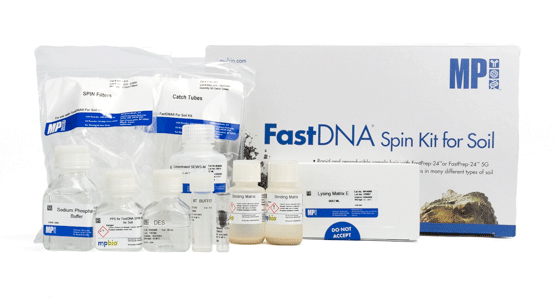
FastDNATM Spin Kit for Soil, 2 mL tubes
Efficiently isolate PCR-ready genomic DNA from fresh or frozen human and animal stool samples, as well as from wide-ranging environmental samples.
View Product